
How Much Should You Cry?
A koan of release and coherence

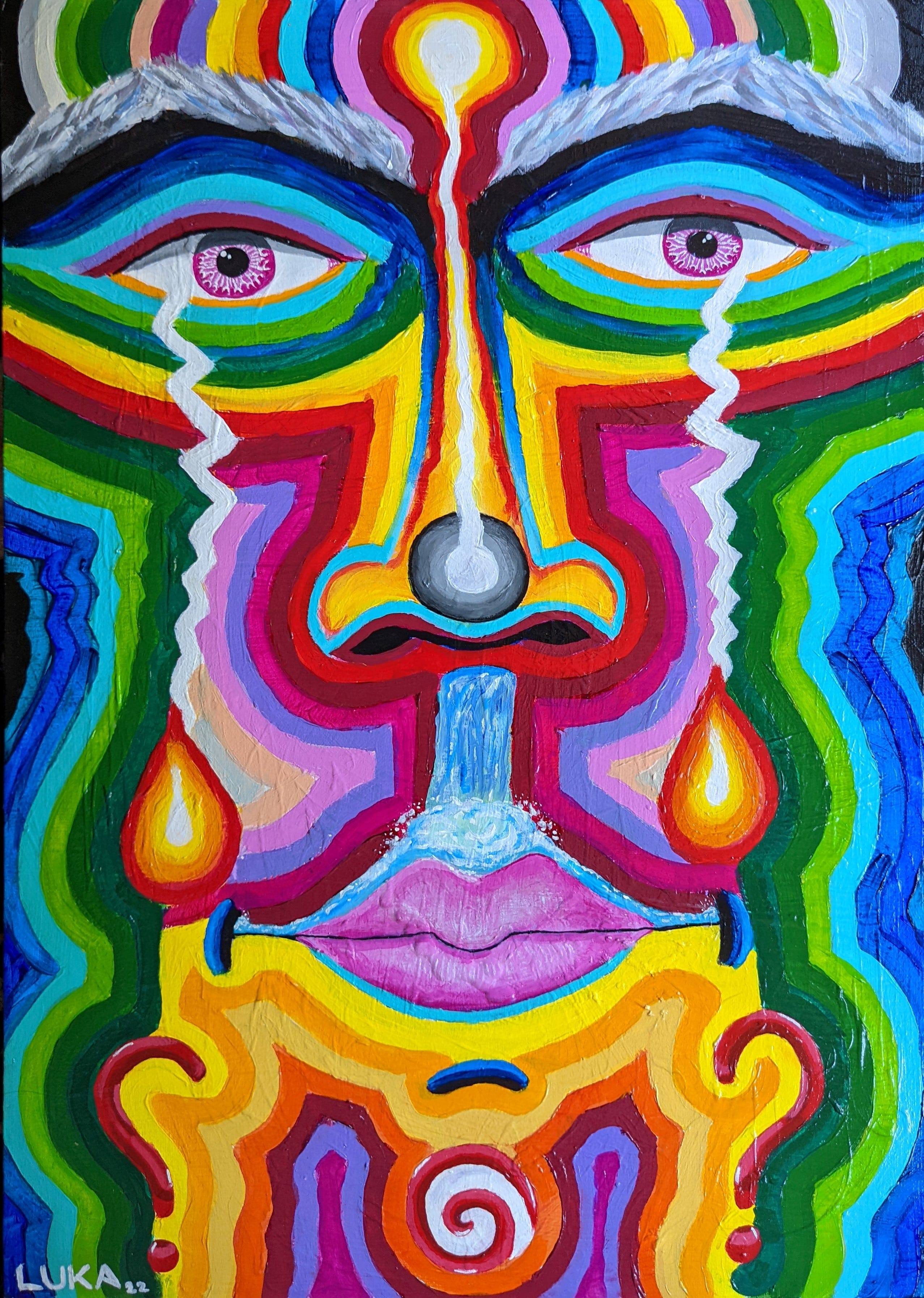
When I was 18, I was heartbroken because of a girl. I felt sad, but instead of allowing the sadness to take its natural course, I wallowed in it, chewed on it, rolled around in it, looked dramatically at the horizon.
There was something that wanted to break. I didn’t let it. I put my back against it. But doing that felt strange. Something wasn’t really working as it’s supposed to. Why was I not crying?
Then I had a surprising realization: I was afraid to cry in front of myself. Not the kind of fear you feel when you’re about to bungee jump. The subtle kind, the kind that clothes itself in justifications, the kind that hides. I was afraid of losing face, even if it was only myself witnessing the loss. How absurd.
Of course I had cried before, but that didn’t count. This was the first time I was confronting the discomfort related to crying.
Early childhood was a time when we were much more natural about these things. We hadn’t yet suppressed the ability to process emotions effectively. We hadn’t yet been informed that some feelings shall be bottled up and pushed down, deep down. Therefore, we also hadn’t yet experienced the joy of clawing our way back to child-like naturalness.
Anyway, I had to cry. I locked myself up, let the sadness mount, and watched the dam break. First, it was awkward. Then I found my stride, and my tears became more confident.
I cried until I was no longer crying about the girl but about previous pain. I wept through my life in reverse. I saw every moment when I wanted to cry, should’ve cried, and didn’t, and cried. A bit like what people describe during near-death experiences, revisiting every moment of their lives, but niched down to only sadness, sorrow, grief.
It started to feel delicious, and I wanted to keep the momentum going. A bit like smoking crack for the first time.
You hold the lighter about half an inch from the glass pipe and take a good, long drag of the sickly sweet smoke. Almost immediately your body is flooded with chemicals, and you feel like conquering a moderately-sized country. That is, until about 5 minutes later, when you want nothing more than to suck on that glass pipe again. I’ve actually never smoked crack, but that’s how I imagine it.
The crying felt naughty. You can get high on that stuff. I searched for every little thing to be sad about and milked it. I became a junkie for tears.
But eventually, every river runs dry. The cries turned into sobs, and the tears turned into stains. I basked in the afterglow. Like an orgasm but different — you know what I mean. I felt cloud-like. Weightless. Formless. And then I felt angry, offended even.
Why the hell have I forgotten how liberating crying is? Where were the wise elders encouraging my tears?
And guess what? I was no longer sad about the girl. The girl had done her job. I just rediscovered something much more important — crying is one of the system’s realignment mechanisms.
Recently, someone told me he doesn’t remember the last time he cried. A lack of tears isn’t proof that you have nothing to cry about; more often than not, it’s proof that you’re skilled in suppression.
There are so many reasons for tears, and none of them is ‘bad.’ There are no bad reasons for crying. If something provokes tears, let it. The organism knows better.

Perhaps there’s a reason why we’re the only species known to shed emotional tears.
While growing up, we learn to guard ourselves against touch. You learn that things that can touch you can hurt you. So you become cautious, selective. And while that appears to be an effective strategy to reduce emotional pain, what it really leads to is numbness. All colors muted. All sounds muffled.
Eventually, the numbness itself becomes the biggest source of pain. That is, until we turn toward our experience, all of it.
A willingness to weep means allowing something to touch you deeply. The first breakthrough with tears is when tears are allowed as an expression of emotional pain. For most people, there’s a layer of grief that is untouched.
Then, when crying is safe, it may become a more frequent and welcome experience. Not because you’ll have more reasons to be sad, but because you’ll have more experiences touching you more deeply.
And then, tears stop being only an expression of sadness or grief.
Crying because you’re sad is no longer a sad experience. You find that all kinds of music can move you to tears. Or books. Or paintings. Or movies. And for different reasons: Sadness. Joy. Gratitude. Beauty. Humor.
Why not shed a casual tear for that sunset?
Or when it’s so funny you cry. Sometimes the laughter really takes you, and you have to hold on for dear life. Until it’s only pure laughter; the object of laughter has been transcended. You’ve lost control. Tears are flowing. Muscles cramp. The air is thin. It feels dangerous. Now that’s the double trouble combo of release.
And that is what crying is experientially: release.
In that sense, crying and laughing are the same motion in a different disguise. Tears of sorrow are tears of humor if you turn the prism just a bit.
I’m not prescribing tears for you; not to worry, life takes care of that. Tears are, however, often necessary when the system (=all parts of you together) is ready to move back into coherence, into a life that feels safe, into a life where you no longer need to brace.
You can’t force that movement. And you don’t know how much there is until the movement happens.
Which is why the question ‘How much should you cry?’ is a koan that can only answer itself experientially.
If you enjoy my work and want to show your appreciation, consider becoming a paid subscriber. Alternatively, you can show your support with a one-time tip or get some artwork on my Ko-Fi page.
Thank you for clarifying and validation the natural expression of emotions, in this case crying. Yes, crying carries and clears out what needs release. 🌊🌊🌊
After my first divorce I didn't cry. After my second divorce I cried every day for almost a year, no exaggeration. I think that supports your point here. :-)